
You do it to yourself
The paradox of addiction to self-criticism

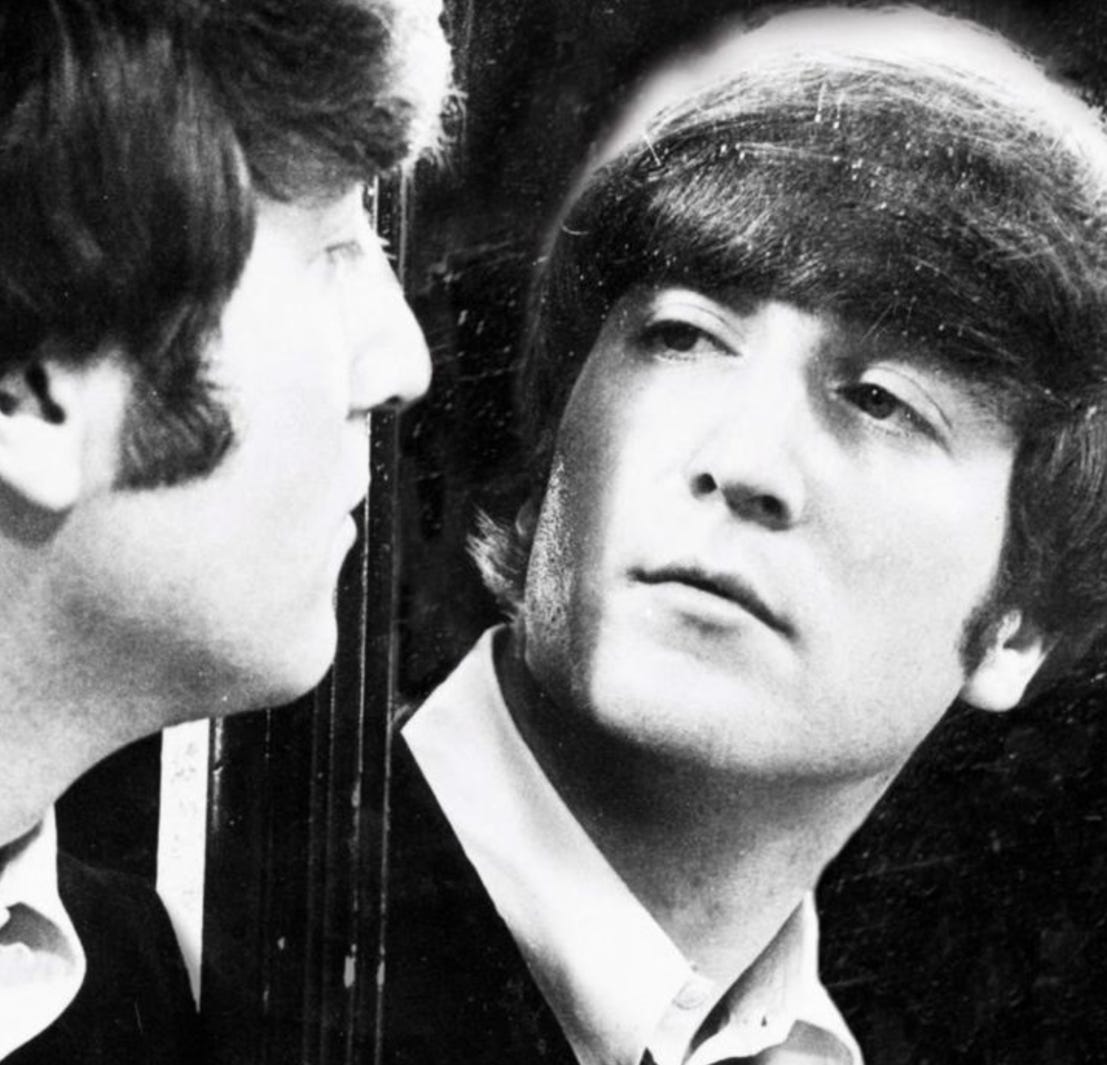
John Lennon
Sometimes human beings do things to themselves that don’t immediately make sense. Like self-harm or self-sabotage. One of the most common is self-criticism. As part of narcissism, it can be quite a surprising thing to find. But it has hidden parts to play.
Core narcissistic strategies include judging, controlling and being emotionally dismissive. But they also include idealisation. What is the difference with this last strategy? We think of idealisation being directed at the narcissistic person themselves. The others we think of as being directed outwards by the narcissistic person. We see a direction of travel. The narcissistic person gets idealised and we – the other - get judged or emotionally neglected by the narcissistic person. But beneath the surface there are other less visible possibilities. For example, the narcissistic person is also susceptible to idealising others – for better or worse. In the UK, our most narcissistic Prime Ministers have often been caught idealising those they shouldn’t have. Winston Churchill fell for Stalin1. and Margaret Thatcher fell for prolific sex offender Jimmy Savile2. So, if idealisation as a strategy gets directed both inwards and outwards, what about judgment? If we listen to iconic actors and singers, we hear hints of harsh self-judgment. Al Pacino, Jonny Depp, Kate Winslet, Jimi Hendrix and John Lennon have all been described as compulsively critical of their own performances. Is this linked to the narcissism that drove them towards fame?
In narcissism, self-criticism can seem out of place. Particularly in its entitled, grandiose form, narcissism doesn’t look self-critical. It finds fault in others, questioning their credibility, authenticity or performance. But I’m going look at four reasons why in narcissism, judgment gets aimed not just at the partner, or the colleague, or the political rival, but also at the self.
A. Shame
What narcissism often covers up, is a fear of shame. Narcissistic strategies might promise to achieve emotional distance from shame, but deep beneath the persona, there might be a suspicion, or core belief in the person, that they are worthy of condemnation. This is not something narcissism will want to dwell on actively. But it might be brought to the surface. Marilyn Monroe once wrote in her diary, “Why do I feel less of a human being than others…subhuman. Why?”3
Legendary actor-director Charles Chaplin asked a sculptor to make his bust. The two of them would soon have an affair and so presumably she tried to sculpt something complimentary. When presented with the bust Chaplin could only see face of a “criminal.”4
B. Improving performance
Vital for maintaining an idealised or powerful persona is performance – whether at work, on stage or in conversation. But performing to a standard that attracts idealisation requires standing out against competition. It requires being literally extra-ordinary. Judging and condemning others will do little to help with this. Being your own harshest critic may help a lot. At least in the short term.
Chaplin was experienced by colleagues, children, wives and mistresses as a harsh, shaming character. But also with himself, as an actor and director, he was a ruthless judge. One scene in ‘Modern Times’ was shot 200 times before he could move on5. This produced a ground-breaking film. But it doesn’t indicate a generous and kind view, by Chaplin, of his work.
We tend to hear about harsh self-talk in connection not with narcissism, but with depression. It can be part of a vicious cycle of low mood and thoughts that lower mood. How could this same mental activity also lead to extraordinary performance? It doesn’t seem to make sense. But self-criticism or judgment comes in different forms. When the goal is improved performance, it is future-orientated. It is not a conclusion about the self, but a frustration with the present. Up to a point this can be helpful and creative. But a bit like exercise, there is a tipping point.
For singer-songwriter John Lennon, such a tipping point came during the making of the ‘Sgt Pepper’s Lonely Hearts Club Band’ album. John’s “bitterly critical”6 inner voice was becoming too powerful – condemning his own voice and ideas (and combining unhelpfully with hallucinogenic drugs). The strategy was backfiring and leading to a crisis. Lennon called it “going through murder”6. His writing partner Paul McCartney took over as leader of The Beatles.
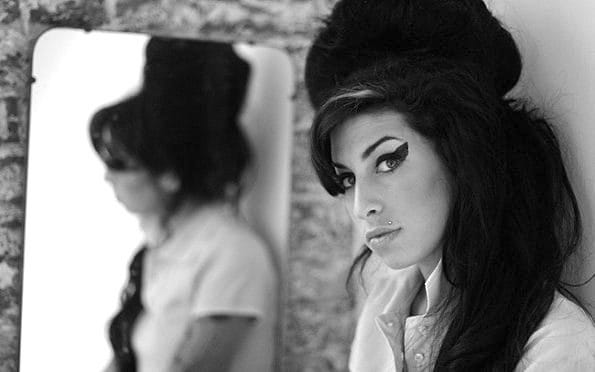
Amy Winehouse
C. Self-judgment as pre-emptive
A core functions of the idealised narcissistic persona is to avoid judgment. In some ways the whole of narcissism can be described as pre-emptive. And the extent of idealisation is a measure of how far the person needs to be from shame. The energy invested, the human cost, and the risks taken to achieve this are often concealed to complete the illusion. But in a short-term way, self-judgment can seem to have a pre-emptive goal. This is a kind of ‘you were going to judge me, but now you don’t need to because I’ve done it for you’.
Even more paradoxically, this pre-emptive self-judgment can be used sometimes in the face of praise. We can hear this perhaps in an interview with Amy Winehouse. She was talking about her album Frank, when she said “Look… I know it’s a terrible thing for someone to come out and say they hate their own music. It’s the worst thing you can do. My album isn’t shit. If I heard someone else singing like me, I would buy it in a heartbeat.”7 Amy knew she would not be so critical if she heard the same performance from someone else.
Why, when there is low risk of judgment should a person judge themselves as a pre-emptive measure? If shame has been experienced as unsafe, then moments of praise should look from the outside like havens of safety. It is admiration and recognition that has been worked for so hard. But when it finally arrives, it does so inevitably in a moment of judgment. And a moment of judgment is more dangerous than other kinds of moment. It has potential to become that horror film moment when, after the last window has been carefully boarded up from the inside, this monster finds a hidden way in.
There might be an illustration of this pre-emptive self-judgment at the end of the film Schindler’s List. Oscar Schindler is handed a heartfelt gift of thanks by the Jews he had saved. In the moment when we the audience recognise his achievement, he turns away and begins to make a list of his failings. In this moment when we step back and appraise his actions, his list does nothing to make us judge him. It evokes for me something quite different. And perhaps that’s the point. Despite his achievements, perhaps what he feared above all else, all along, was shame. And the moment of praise and recognition feels nevertheless for him like a moment of judgment*.
D. Splitting into parts: judge and judged.
During the childhood that nurtured narcissism, there has often been repeated experiences of judgment so that being judged has become intolerable. Two aspects of the childhood traumatic situation were important. The child was judged by another within a relationship. The child had little control over, or warning of, these interactions. These features of the traumatic situation help explain why judging ourselves as adults is different. In self-judgment, a part of us now takes up the judgmental role which promises distance from shame. And the experience of being judged by another is no longer present. No one now is in control of the interaction but ourselves.
Fear is different to shame but we think we avoid both. We can imagine though an adult who hates being scared by others, who nevertheless has a love of bungee jumping. There is still the fear. But now - even in this jumping and this falling – there are no surprises.
Is this a subtle addiction that has become so normal that it is invisible? On a wide spectrum, self-criticism might be thought of as a feature of our narcissistic modern culture. If we have adopted this strategy, how can we maximise the benefits and control the dangers? If we rely on self-criticism, we need to deliberately take breaks from it – to practice a different way of being, or just to check that we are still able to. Therapy is an obvious example of such an intentional break. But it is time limited, lacks integration within our lives and usually costs money. Less limited, and less expensive is a relationship with someone who can love us for the non-performer under our shiny, competent or powerful surface. But we might need the first of these in order to find and manage the second.
Disclaimer: All views expressed are my own unless otherwise stated, and do not necessarily reflect the views of any institution I have been employed by. The content here is for information and should not be interpreted as advice.
*This is not a comment on the real Schindler himself whom I haven’t read about but on what the film scene might help to illustrate.
Marilyn Monroe
Notes
1. Norman, A. (2012) Winston Churchill: Portrait of an Unquiet Mind. Pen & Sword.
2. Davies, D. (2014). In Plain Sight: The Life and Lies of Jimmy Savile. Quercus.
3. Buchthal, S. & Comment, B. (2010) Fragments. Harper Collins.
4. Ackroyd, P. (2014). Charlie Chaplin. Vintage books.
5. Brody, R. Charlie Chaplin’s Scandalous Life and Boundless Artistry. In The New Yorker, September 18th, 2015.
6. Miles, B. (2002). The Beatles: A diary. Omnibus Press.
7. Mulholland, G. (2004). Charmed and dangerous. The Guardian https://www.theguardian.com/music/2004/feb/01/popandrock.amywinehouse
My partner is a musician, and a few days ago we talked about why we don’t feel joy when people praise our work. On one hand, we work hard to impress with what we do, and when the success we aimed for finally comes, it feels… fine. If we’re satisfied and can live with the consequences, that’s good. But we don’t feel joy — it’s like we’re not surprised by it, yet we still wonder if we’re missing something by not allowing praise to really reach us. As if everyone who enjoys receiving compliments is somehow wrong about life, and we’re the ones who have it right. That's how strong we feel about our inner judge :)
This is wonderful analysis. Self criticism is one of the root cause of depression. I understand it as my Mother’s voice that still lives inside me and consistently criticizes me, never appreciates me. It is great to hear from you about how extremely self critical narcissists are and they pass that on to people who are close to them. I look forward to your posts and learn so much from them. Recently I revisited your post where you have compared Narcissistic people and psychotic individuals. You had mentioned that psychotic individuals become dis functional. I can identify with that. How come narcissists never become dis functional individuals? They never look within and believe that they are the perfect versions of themselves in their mind.